Category: Smart Home & Tech

  • iPhone Duo: Apple finally folds. Is it worth $1,999?

    iPhone Duo: Apple finally folds. Is it worth $1,999?

    It took Apple years, but the iPhone finally folds. The new iPhone Duo is a small phone when it is closed and a mini tablet when you open it. It is also the most expensive iPhone ever.

    At a glance

    • Price: from $1,999 (256 GB) up to $3,199 (2 TB)
    • Screens: 5.4-inch outside, 7.6-inch inside when opened
    • On sale: October 23, 2026 (pre-orders opened October 16)
    • Chip: A20 Pro, the same as the iPhone 18 Pro
    • Colors: star white and night sky
    • Weight: 254 grams, a bit heavier than most phones
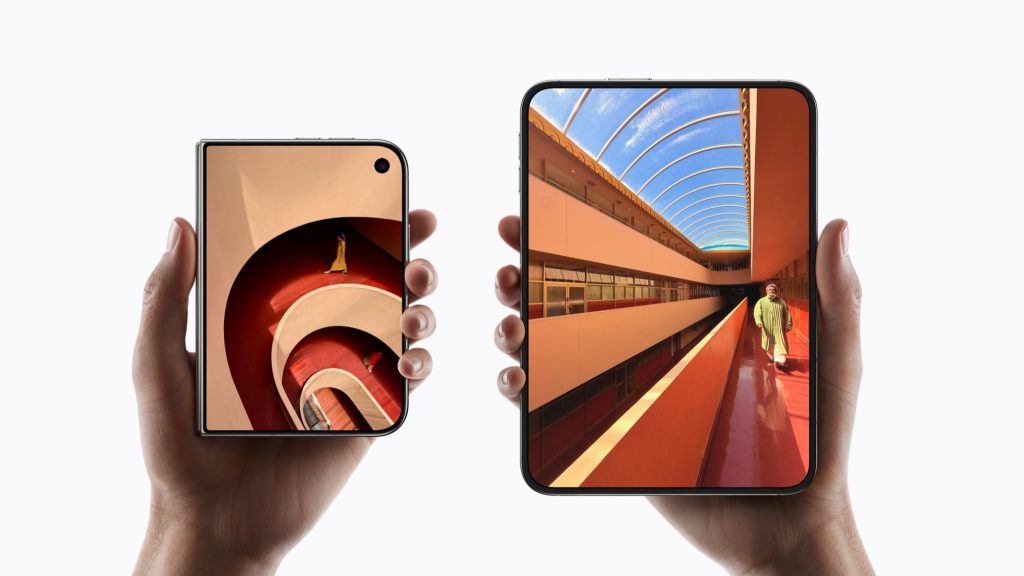
    Two hands holding iPhone Duo, one closed like a small phone and one opened like a mini tablet
    Closed it is a small phone. Open it is a mini tablet. Image: Apple

    What you get

    • Two phones in one: a compact 5.4-inch screen outside, and a 7.6-inch screen inside that Apple says is 50 percent larger than the iPhone 18 Pro Max display.
    • Thinnest iPhone ever when opened, at 5.2 mm. Closed, it is thicker than a regular iPhone.
    • Multitasking: two apps side by side on the big screen, and the phone switches screens on its own as you fold and unfold it.
    • Battery: two batteries, rated up to 24 hours of typical use.
    • Tough build: a titanium frame and hinge, and it is water resistant (IP68).
    • Siri AI: you can keep Siri open next to an app on the big screen and ask about what you are looking at.

    What you give up

    • No Face ID and no Action button.
    • Simpler cameras: two 48 MP cameras, but no true zoom lens like the Pro models.
    • The crease: there is still a fold line on the inside screen. Apple treats the screen with a special texture to hide it and sells a replacement top layer.
    • Price: about $700 more than an iPhone 18 Pro Max, before a case.

    The price list

    StoragePrice
    256 GB$1,999
    512 GB$2,199
    1 TB$2,599
    2 TB$3,199

    Cases are extra: the iPhone Duo Case is $79 and the Folio with a kickstand is $129. Apple also offers leasing from $57.99 a month and trade-in credit.

    Before you buy

    • This is version one. First-generation Apple products usually get better and cheaper in the second round.
    • Get AppleCare+. A folding screen is the most expensive part of the phone to fix.
    • Early supply may be tight, so expect waits if you did not pre-order.
    • If you want the best camera, the iPhone 18 Pro or Pro Max is cheaper and takes better zoom shots.

    My take

    Confession time: I have never owned a folding phone. The closest I ever got was a Motorola Razr flip phone, and the most advanced thing I did with it was snap it shut to hang up on people. Honestly? That was the best part.

    So I am going to say it: I have never been a fan of the folding phone era. Two screens clapping together in my back pocket all day? A $2,000 hinge between me and a cracked screen that has me sitting on the edge of the bed contemplating my life choices? No thank you. My back pocket has already killed enough phones without giving it a second screen to work with.

    And here is the controversial part. I do not think the future is a bigger phone that folds in half. I think the future is no phone at all. Give me a watch on my wrist, earbuds in my ears and a screen in my glasses, and let me leave the brick at home. Meta is already putting screens in glasses, as I covered in my Meta glasses breakdown. Folding a phone in half feels like Apple making the brick fancier when it should be making it disappear.

    But fair is fair. Here is what Apple got right:

    • A real tablet in your pocket. A 7.6-inch screen for movies, maps and two apps side by side is genuinely useful, especially if you work from your phone.
    • Thinnest iPhone ever when it is open. That is impressive engineering, even if closed it is a thick sandwich.
    • Titanium and water resistance. Apple clearly built this one to survive real life, not just a keynote.
    • Battery that lasts all day, which has always been the weak spot of folding phones.
    • Apple waited. Samsung has had years to work out the bugs, and Apple got to learn from all of them.

    My verdict: if you love gadgets, have $2,000 burning a hole in your pocket and always wanted an iPad mini that fits in your jeans, the Duo is a beautiful piece of tech. Everyone else: wait for version two, when it is cheaper, tougher and has Face ID. Or do what I am doing and wait for the day your glasses replace your phone completely.

    Your turn: folding phone, flip phone or no phone? Tell me in the comments.


    What to watch next

    The iPhone Duo goes on sale October 23. The first real-world reviews, and the first drop tests, will show whether the hinge and crease hold up. We will update this post when they do.

    Photos: Apple. Sources: Apple Newsroom, Macworld.

  • Meta’s smart glasses lineup, explained: which pair (if any) is worth it?

    Meta’s smart glasses lineup, explained: which pair (if any) is worth it?

    A few years ago, smart glasses were a punchline. Now Meta sells so many kinds that you need a guide just to pick a pair. Some have a camera, some do not, one has a screen inside the lens, and next year there is a VR pair. Here is the whole lineup in plain English.

    At a glance

    • Prices: from $249 to $799, plus VR glasses coming next spring for about $1,300
    • Brands: Ray-Ban, Oakley and Meta’s own “Meta Glasses”
    • Newest: Ray-Ban Meta Audio, the first pair with no camera (from $349, out October 13)
    • Fanciest: Meta Ray-Ban Display, with a small screen inside the lens ($799)
    • Styles: Meta says more than 100 by the end of the year

    The lineup

    GlassesPriceCameraWhat makes it different
    Meta Adventurer (Meta Glasses)From $249YesMeta’s own brand, no Ray-Ban logo. The cheapest way in. Out October 23.
    Ray-Ban Meta AudioFrom $349NoMusic, calls, translation and the AI assistant. Up to 12 hours of battery. Out October 13.
    Ray-Ban Meta (Gen 3)From $449Yes, 12 MPThe classic camera glasses, now lighter, with 3K video and up to 9 hours of battery.
    Oakley MetaVariesYesSporty versions for running, biking and the outdoors.
    Meta Ray-Ban Display$799YesA small private screen inside one lens for messages, directions and more, controlled by a wristband that reads finger movements.
    Meta VR GlassesAbout $1,300—Full virtual reality in glasses form. Coming spring 2027.

    Why a pair with no camera?

    Camera glasses have a reputation problem. People have been recorded in public without knowing it, and critics started calling them “pervert glasses.” Meta added a recording light and blocks the camera if someone covers it, but the worry never fully went away.

    The new Ray-Ban Meta Audio skips the camera completely. You still get music, calls, live translation and the AI assistant, and the glasses are lighter because of it. It is Meta quietly admitting that not everyone wants a camera on their face.

    Other new tricks

    • Hearing help: a new feature that makes voices easier to hear in loud places like restaurants. It is a $149 one-time fee after a 30-day trial. Meta says it is not a hearing aid.
    • Directions in your lens: the Display model is adding biking and transit directions.
    • Translation: hear another language translated in your ear as people talk.

    Before you buy

    • Most models need the Meta AI app on your phone and a Meta account.
    • Prescription lenses are available for many styles, but they add to the price.
    • If you wear them where cameras are not welcome, like gyms, locker rooms, schools or some offices, expect looks. Or pick the Audio pair.
    • Battery life is measured in hours, not days. Plan on charging them every night.

    My take

    Full disclosure: I own a pair of first-generation Ray-Ban Meta Wayfarers, and they have been begging me for an upgrade. The battery taps out after a few hours, which is not ideal when the whole point is wearing them all day. So yes, I have been shopping, and I have opinions.

    Let me say the quiet part out loud: the no-camera Audio pair is the smartest thing Meta has done with glasses. Most of us want the AI assistant in our ear, not a camera on our face. Nobody wants to be the person at the grocery store who might be filming the cereal aisle. With the Audio pair you get the smart stuff, longer battery life, and you get to stop looking like a “pervert glasses” suspect every time you walk into a room. Honestly, that pair has my name on it.

    And I am genuinely excited that Muse, Meta’s new personal AI agent, is coming to the glasses. An assistant that keeps your calendar, your habits and your to-do list straight, hands-free, is the kind of thing that could actually make smart glasses useful instead of just cool.

    Now the controversial part. Meta sells so many versions that picking a pair feels like ordering coffee at a fancy café. Camera or no camera? Screen or no screen? Ray-Ban, Oakley or Meta’s own brand? Over 100 styles? I came in for glasses, not a personality test.

    And here is the elephant in the room: Apple. Apple’s own smart glasses are rumored for late 2027, reportedly with cameras and no screen at first, priced to compete in the $200 to $500 range. So do you buy Meta now, or wait for Apple to show up fashionably late and charge you extra for the case? If history is any guide, Apple fans will wait. Everyone else will be wearing Meta for two years before Apple’s version is even out.

    My pointers if you are shopping:

    • Just want music, calls and AI? Get the Audio pair. No camera, longer battery, no awkward looks.
    • Want photos and video of your life? Gen 3 is the one. Just be cool about where you point it.
    • On a budget? The $249 Adventurer frames get you in the door.
    • Early adopter with $799 to spare? The Display model is the closest thing to the future you can buy today.
    • Deep in the Apple world? Waiting until late 2027 is a fair call, but it is a long wait.

    My verdict: the Audio pair is the sleeper hit of the lineup, and Meta is way ahead while Apple is still in the lab. Gen 1 owners like me finally have a real reason to upgrade.

    Your turn: camera or no camera? And are you buying Meta now or waiting on Apple? Tell me in the comments.


    What to watch next

    The Audio glasses arrive October 13 and the Adventurer frames on October 23, so real-world reviews are coming soon. The big one is next spring, when Meta’s VR glasses go on sale. And keep an eye on Apple, whose own glasses are rumored for late 2027.

    Top photo: Meta. Sources: Meta Newsroom, Engadget, TechCrunch, MacRumors.

  • Apple HomeView: Apple’s new smart home screen, explained

    Apple HomeView: Apple’s new smart home screen, explained

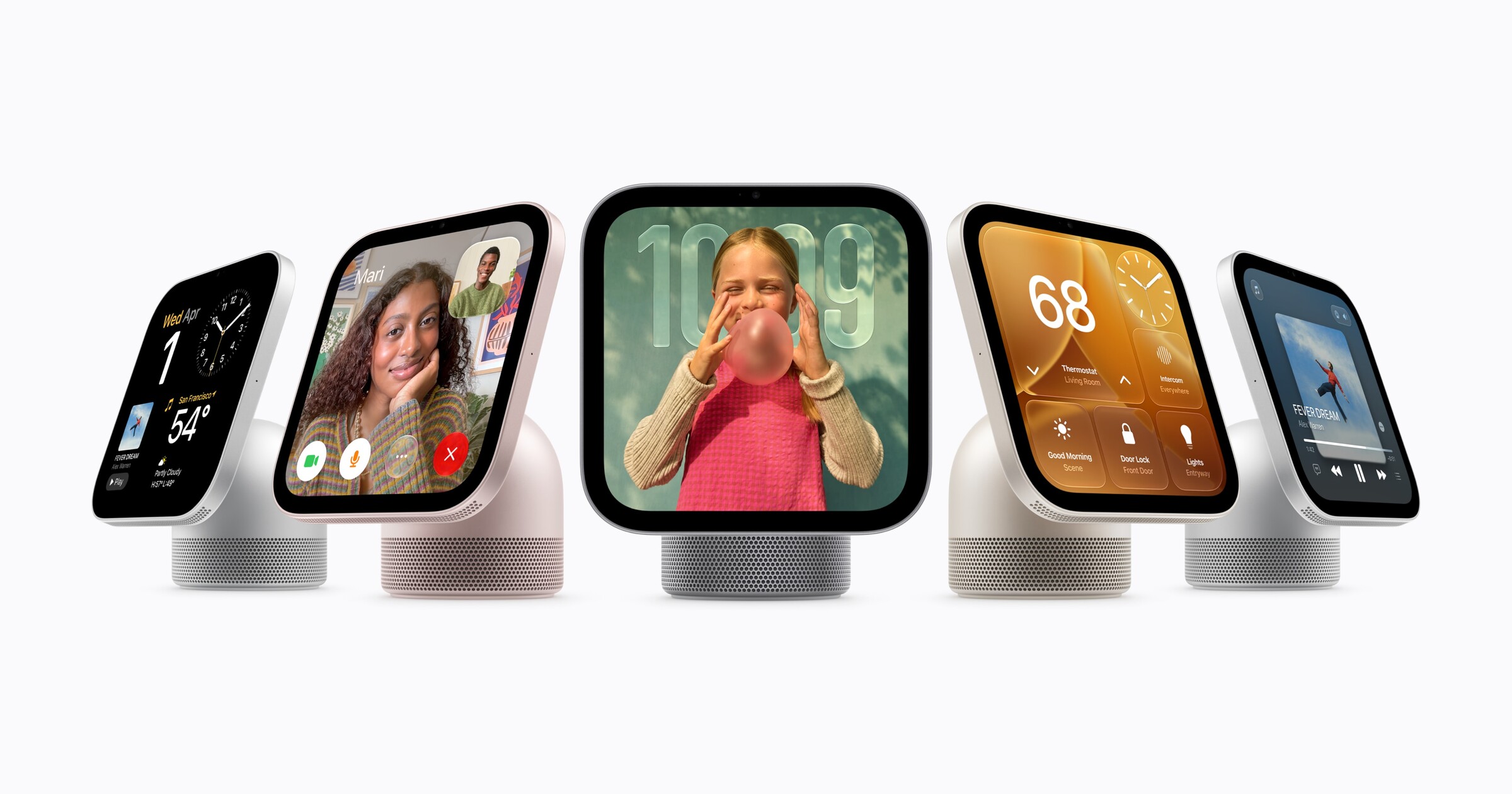
    Apple finally has an answer to the Amazon Echo Show and Google Nest Hub. It is called HomeView, and it is a small screen with a speaker that is meant to sit in the middle of your home and run it.

    At a glance

    • What it is: a 7-inch smart screen with a speaker, for the kitchen, nightstand or wall
    • Price: $299 (tabletop or wall-mounted)
    • Announced: October 13, 2026
    • In stores: November 13, 2026 (pre-orders open now)
    • Brains: Apple A18 chip and the new Siri AI
    • Competes with: Amazon Echo Show and Google Nest Hub

    What it does

    • Runs your smart home: lights, locks, thermostat, blinds and cameras, by touch or by voice. It can show up to nine camera feeds at once.
    • Knows who is looking at it: it recognizes up to six people by their face and shows each person their own messages, calendar and apps.
    • The new Siri AI: a smarter, more conversational Siri. It works best with a newer iPhone or iPad that supports Apple Intelligence.
    • Music and calls: a real speaker with a woofer in the base, plus FaceTime with a camera that follows you around the room.
    • Kitchen helper: turns online recipes into step-by-step instructions with hands-free timers.
    • Safety: listens for smoke and carbon monoxide alarms and alerts your phone.

    “Apple HomeView is designed to be shared by everyone in the home yet feel completely personal to each user.”

    Greg Joswiak, Apple

    Tabletop or wall-mounted

    There are two versions, and both cost $299.

    TabletopWall-mounted
    ColorsSilver, starlight, rose pink, space graySilver, space gray
    Best spotKitchen counter, nightstand, side tableEntryway, hallway
    SoundSpeaker with a woofer in the baseTwo speakers tuned for the wall
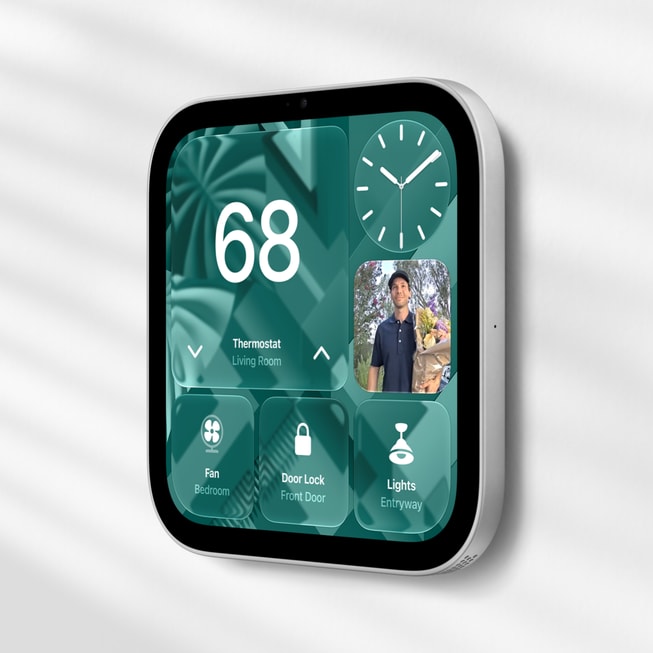
    The wall-mounted Apple HomeView on a wall
    The wall-mounted version. Image: Apple

    The wall version needs one of three mounts made by Schneider Home, sold separately:

    MountPriceGood to know
    USB-C wall connector$59.95Easiest. Plugs into power with a cable.
    AC wired$79.95Wired into your home power. An electrician may be needed.
    PoE wired$129.95Power and internet over one network cable. Coming in early 2027.

    Before you buy

    • Siri AI on HomeView is English-only for now, and HomeView is not sold in the European Union.
    • To get the most out of it, you need a newer iPhone or iPad that supports Apple Intelligence. Without one, you still get the smarter Siri, but not the personal features.
    • It works with Apple Home and Matter smart home gear, so many existing lights, locks and plugs will work. Check yours before you buy.
    • Some camera features, like recognizing packages, people and pets, need a paid iCloud+ plan.

    My take

    Let me say what a lot of people are thinking: is HomeView a genuinely cool addition to the Apple home, or is it a $299 dust collector with a really nice screen?

    Be honest. You already own a phone that does all of this. Most of us also have an iPad that has been sitting in a drawer since 2022, waiting for its big comeback. HomeView is basically that iPad, glued to a speaker, with a hinge. Give it six months and I can picture a lot of these living their best life as the world’s most expensive digital photo frame. “Hey Siri, what’s dust?”

    And this is the first big new product under Apple’s brand-new CEO, who took over in September. A smart screen? Amazon and Google have been selling those for years. If this is the big new vision, where is the innovation? To be fair to the new boss, this thing was in the works long before he got the corner office. But it still landed on his watch, and it does not exactly scream “new era.”

    Now, before the Apple fans come for me in the comments, here is what Apple actually got right:

    • Face recognition for the whole family. One shared screen that shows each person their own stuff, and only theirs, is genuinely clever. Your teenager will not be reading your texts on the kitchen counter.
    • Privacy. If you are going to put a camera and microphone in your kitchen, I would rather trust Apple than an ad company.
    • It actually sounds good. A real woofer in the base beats most smart displays, which tend to sound like a phone in a cup.
    • The wall mount. A screen by the front door that shows your doorbell, locks and cameras at a glance is something a phone cannot do as well, because nobody wants to dig out their phone to see who is at the door.

    So here is my verdict. If you already live in the Apple world and have a smart home to control, HomeView makes sense, especially on the wall. If you are buying it just because it is new and shiny, save your $299. Your iPad in the drawer is feeling left out.

    Your turn: genius or dust collector? Tell me in the comments.


    What to watch next

    HomeView goes on sale November 13. The first hands-on reviews should show whether the new Siri AI lives up to the promise. We will update this post when they do.

    Top photo and wall photo: Apple. Sources: Apple Newsroom, MacRumors, TechCrunch.